

HR Champions Administrator
The Hybrid Office
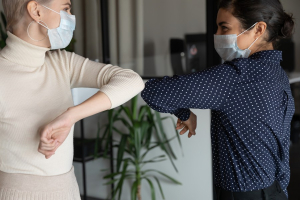
Bolstered by a truly amazing vaccine rollout, and notwithstanding a couple of potential glitches this week, the country is forging ahead with its roadmap out of lockdown. It still seems however that most businesses haven’t really got to the bottom of what the workplace will look like. The shape that “The New Normal” will take continues to be a subject of wide-ranging debate.
The effect of lockdown has been very different for different businesses and industries. There has been a wealth of stories about businesses that have decided to do away with their office space altogether after realising that, with staff now working from home, they really don't need the expense.
On the other extreme, there is almost a desperation to bring employees back into a central workplace and resume some more traditional ways of working.
There’s not going to be a “one-size-fits-all” here and organisations will need to establish what works best for them in terms of productivity whilst remaining sympathetic to the wishes of their employees and also attractive to new recruits in the future. There are some common points of consideration however:
- For many employees, working from home has been a positive experience and a high proportion wish to continue doing so, at least partially
- Others find working from home a challenge both in terms of their own productivity and their health and wellbeing, in particular their mental health
- For business, there are the potential benefits of cost savings whilst endearing employee satisfaction by allowing continued working from home
- Working from home puts new strains on business just as maintaining a safe working environment will, both threatening organisational culture
A compromise seems to be on the cards for most organisations and so it’s very likely that a lot of businesses will adopt some form of hybrid approach; a solution whereby staff can mix and match their time spent in the workplace or at home. Notwithstanding, we predict that we will be see a high volume of flexible working requests over the coming months and businesses may find that keeping everyone happy may take some not inconsiderable planning.
When contemplating requests to continue working from home, we think there are some significant advantages to working in the office that should not be overlooked:
- The transmission of ideas and information, almost by osmosis, that only happens when people share space and time together
- Instantaneous communication; being able to simply swivel your chair to ask a colleague a simple question rather than having to organise a zoom call or send an email
- The creative space of the watercooler or coffee machine that often ignites ideas when otherwise distant colleagues can communicate
- The advantage reading the body language and visual clues that others often give when holding in-person meetings enabling individuals to judge their colleagues’ true reactions when ideas are floated
- Fairer meeting outcomes that aren’t dominated by the person who takes charge over screen based meetings
- Spontaneous communication of thoughts and ideas
Remote working also poses huge challenges to new recruits. Understanding the culture of an organisation is usually learned through experience, by watching and shadowing others to see “how things are done around here”. Having to ask questions from a colleague who might actually be a complete stranger, may not come easy. Furthermore, having every question committed to email, and thereby creating an instant audit trail, may create hesitancy in asking quite pertinent questions or simple asks that would usually be done across the desk.
Business leaders need to carefully consider what the shape of there workplaces will mean to the ability of their employees to be able to do their jobs effectively and efficiently. The draw of cost saving may be easily outweighed by the positive effects that spending time with people brings.
Returning to the workplace will be part of the content of our forthcoming breakfast club on 1st April. You can book you place at https://hrchampions.co.uk/events/event/208/HR-&-Employment-Law-Update--Online-1st-April
And if you have any questions raised by the points here, as usual we are available for support on 01451 331331 or via email on This email address is being protected from spambots. You need JavaScript enabled to view it.

Enforcing Covid Guidelines

The last 12 months has presented a raft of new rules and guidelines that we are expected or requested to adhere to in order to protect the health & wellbeing of ourselves and others. There has been much debate over the legality of employers to enforce such guidelines, in particular whether receiving the Covid-19 vaccine can be mandated as a condition of employment.
The debate took a further twist recently when an Employment Tribunal ruled to uphold an employer’s decision to dismiss an employee for refusing to wear a mask when he was on a client’s premises.
If we delve a little further into that case, we will see that the employee, a delivery driver, arrived at the premises of Tate & Lyle where he was issued a mask and told to wear it at all times whilst on site in accordance with the company’s health & safety rules. He took the mask off whilst he was in his cab and refused to put it back on when challenged stating that he didn’t have to wear it whilst he was isolated in his cab.
Because of this breach of rules, the driver was subsequently banned from Tate & Lyle’s premises. Despite an appeal from the employer to have the driver allowed back on site, Tate & Lyle stood firm and, as the employer did not have any alternative work for the driver, he was dismissed for “some other substantial reason”; or SOSR in HR speak.
So, whilst the driver wasn’t dismissed explicitly for refusing to wear a mask, his contract would have dictated that he must follow the health & safety rules of any clients whilst on their premises. And because the wearing of a mask was a health & safety rule of Tate & Lyle’s, it was this failure to wear one that ultimately led to his dismissal.
Let’s consider the situation if it was the employee’s direct employer who held the rule that masks were to be worn on site. Refusal to wear a mask in this situation would more likely fall under “failure to follow a reasonable management instruction”. This is very often cited as grounds for dismissal, and, under the current circumstances most would agree that expecting staff to wear a mask on site, at least whilst moving around, is indeed reasonable.
So how is this likely to extend to the insistence that employees must be vaccinated. Well, that isn’t something that we are going to speculate on at this stage. It’s something we’ve already discussed in a previous post, but we’ll have to wait for a case to reach Tribunal before we have a definitive legal answer.
We should consider though that Government guidance is to encourage uptake of the vaccine rather than mandate it and that there is quite a difference from being injected with a something than simply wearing some PPE. Furthermore, we should note the Government information regarding the vaccine and Covid transmission:
Can you give COVID-19 to anyone if you have had the vaccine?
The vaccine cannot give you COVID-19 infection, and a full course will reduce your chance of becoming seriously ill. We do not yet know whether it will stop you from catching and passing on the virus, but we do expect it to reduce this risk. So, it is still important to follow the guidance in your local area to protect those around you.
To protect yourself and your family, friends and colleagues, you still need to:
- practise social distancing
- wear a face mask
- wash your hands carefully and frequently
- follow the current guidance
In the meantime, organisations need to undertake their own risk assessments, and apply appropriate rules and guidelines. Make sure these are communicated to all employees with senior leaders role modelling and re-enforcing them. Include any outside organisations in your communications that might have reason to come onto your premises. Remember to keep an audit trail so that employees can be held to account.
We have documents and templates to help businesses with risk assessments and guideline implementation and as usual we are available for support on 01451 331331 or via email on This email address is being protected from spambots. You need JavaScript enabled to view it.
Budget Check

We don’t usually respond to the budget on this blog, preferring instead to leave that sort of commentary to the accountants and financial planners. On this occasion however, with the budget playing such a significant part in post Covid economic recovery, and having such dramatic effect on jobs and employment, we thought a few lines were in order.
As is customary, opposition leaders and analysts took the opportunity to lambast the Chancellor for devising a budget that, in their opinion, failed to deliver a satisfactory economic stimulus to help the country bounce back from the pandemic. But to be fair, we didn’t think it was too bad.
Backed by optimistic statistics about the future of the economy from the Office for Budget Responsibility, Mr Sunak resisted calls to immediately raise personal taxes and cut spending to repay the unparalleled public borrowing that Covid has forced upon the Government. Instead, the Chancellor has maintained many of his costly job protection measures and aimed a delayed taxation increase largely at super-profitable businesses. We would still like to see some measures that capture appropriate tax revenue from the likes of Amazon and Google.
Here are the main points of note:
- The furlough scheme will continue until September 2021. Employees will continue to receive at least 80% of their gross pay and this can still be topped up by employers who must also continue to cover the cost of NI and pension contributions.
- Additionally, eligibility for the furlough scheme increases. From 1 May 2021, staff who were employed from 2 March can be furloughed. Currently the cut-off date is 30 October. Also, you’ll be able to use the scheme even if you haven’t used it previously.
- In July, furlough grants will reduce to 70% of wages and to 60% of wages in August and September. Employees must still be paid at least 80% of normal pay so the 10% & 20% reduction in grants must be covered by employers if they wish to maintain staff on the scheme.
- We see this “tapering off” of the grant as a signal to employers that it’s time to take stock and make a call on the tough decisions regarding employees that the furlough scheme has enabled them to delay.
- Self employed grants will also continue. There will be a fourth grant covering February to April (at 80% of average profits). There will also be a fifth and final self-employed grant for May onward. Some previously excluded self-employed workers will be able to claim the 4th and 5th grants so long as they submitted their 2019/20 tax return before midnight 2nd March.
- The National Living Wage sees a modest increase to £8.91 from April 2021. Remember this is the minimum hourly rate for those aged 25 and over. There were also modest increases for the National Minimum Wage.
- Personal Allowances will still increase to £12,570 for the 21/22 tax year with the higher rate band will going up to £50,270. However, these will then be frozen until April 2026. This is the closest thing to a tax increase that the chancellor imposed as 100% of any pay increases that employees are awarded will be taxed in some form.
- The Employer cash bonus incentive scheme for taking on apprentices will rise to £3K per apprentice regardless of the apprentice’s age and the scheme is extended by 6 months to September 21.
Another point of note was the announcement of the “Help to Grow Scheme”. This is a 12 week, partially funded education programme, to support senior managers of small and medium sized businesses to boost their business’s performance, resilience, and long-term growth.
Whilst the training will be delivered by business schools and universities, its introduction does endorse the benefits of the Leadership and Management Training that we have been delivering for years. Clearly the Government recognises that to drive an effective economic recovery, businesses need to have senior decision-makers who are capable of leading and who understand the consequences of their actions and decisions.
Our own Accredited Training Course schedule is in full swing and 100% funding is still available for businesses in the Worcestershire, Swindon & Wiltshire, Bristol & West of England and Heart of the South West LEP areas. Take a look at the details on our website or contact us for further information on 01452 331331 or e-mail This email address is being protected from spambots. You need JavaScript enabled to view it.
Preparing to Un-Furlough

We now have the Government’s cautious, 4-step Roadmap out of lockdown. Schools will return from 8th March although little else is changing at that time and the stay at home message continues until the end of March. Despite this, businesses at least have a framework around which they can formulate a plan to resume some semblance of normality.
It’s likely to be some months yet before we see businesses fully returning all employees to the workplace, if indeed that is their goal. Some of our own clients, in consultation with their employees, have already made the decision to do away with their offices entirely; if not immediately then as soon as a break in their leases allow. Whilst others have strongly confirmed their intentions to retain their work premises.
The Chancellor has promised that furlough will last until the end of April but the suspicion is that it will be extended again for those industries that continue to have restrictive trading terms imposed, such as hospitality and leisure. For others, the end of furlough will force those difficult decisions regarding employees that the furlough scheme has enabled them to delay.
The details of the Government’s continuing financial support package for the economy won’t be fully revealed until the Chancellor’s budget next week. However, the coming weeks and months is a time for organisations to formulate and implement their plans to return. This must involve strategies for re-engaging employees back to a working environment.
Remember that some employees may not have done any work for months. And whilst working from home has been adopted by many, the old workplace may still seem like a new or alien environment. As we plan our returns, we need to adopt a structured and consistent approach to ensure employees are treated equally and fairly. You might want to consider some of the following:
- Give employees as much notice as possible: This should go without saying but don’t fall into the trap of keeping your return to work plan a big secret that only senior managers have access to. Keep everyone informed and even celebrate your plan so that everyone has plenty of time to get used to the idea of coming back to work and the positives that it will bring.
- Hold return to work interviews: We recommend a return to work interview for every return from absence anyway. Working from home and furlough should be no different. Use the meeting to check the employee’s physical health, mental health along with any concerns they have about returning. You could arrange this prior to your official start date, virtually on Teams or Zoom if necessary but in person would be better. Staging onsite meetings over a period of time will enable you to maintain social distancing amongst employees.
- Offer re-familiarisation days: Give employees the chance to come in and have a look around so they can acquaint themselves again with the workplace and understand any changes you have made to keep people safe. You may have had to redesign workplace layout or introduce work pods or one-way systems. Pre-acclimatising will void any of the confusion we usually associate with “first day at big-school”.
- Plan and communicate any rotas or shifts: If you’re bringing people back on a rota or shift basis to keep them socially distanced, make sure you’ve worked out who is working with who and clearly communicate when people will be required for work. For business efficacy you’ll need to ensure that people who rely on each other are working together. Also make sure that staff understand the importance of any “air locks” in between shifts and don’t turn up to work too early or leave too late.
- If you’re one of the businesses that will be consolidating working from home options as part of your ongoing practices and employee engagement strategy, make sure your contracts and handbooks reflect any changes, keep you compliant and work in your favour when you need it. You may need to include right of access to an employee’s home to retrieve company equipment if and when they leave, for example.
- You may still have employees who don’t want to return to work. You’ll need a plan to manage these people. Consider I advance the process you are going to follow to ensure consistency across the company and how to resolve issues including AWOL employees and those who don’t want to return.
- If redundancies seem inevitable, don’t delay. It’s only fair that your staff get as much opportunity as possible to look for new jobs. It would be far worse to tell them on the day that they are expecting to return that there is no position for them to come back to. You can still consult with employees about potential redundancy during furlough. If you do need to action redundancies then notice can be issued whilst staff are furloughed. However you can’t use furlough remuneration to cover pay during the notice period, which needs to be at 100%.
- Don’t forget your basic Health & Safety. If buildings or work spaces have been empty for a while you may need to test that everything is working to standard and is safe. Fire alarm systems checks are obvious but consider a report that the rat population increased by 25% last year. Check for vermin infestation and also that that telephone and electrical cables haven’t been gnawed through by rodents.
For any help or support with any of the above from planning your return, communicating it with staff or making redundancies, we’re available on 01452 331331 or e-mail to This email address is being protected from spambots. You need JavaScript enabled to view it.
Mental Health Quick Wins

Employee mental health and wellbeing continues to be one of the main topics of discussion that has arisen as a side-effect of the coronavirus crisis; or more accurately, that has arisen as a side effect of the restrictions that have been imposed in order to stop the spread of the virus.
The Government is holding its cards very close to its chest regarding any potential relaxation of lockdown restrictions, insisting that it will abide by the science. The First Minister for Wales has expressed some optimism that the end of the stay-at-home rule is in sight. Northern Ireland on the other hand has already said that lockdown there will continue until at least 1st April. We should expect Mental Health issues to continue to be a cause for concern.
As an HR and Training consultancy we’re doing our utmost to practice what we preach regarding employee mental health. So here, we share some of the actions and measures we have taken to support our own team members. Most of them are relatively inexpensive and can be implemented quickly and easily:
- Our team expressed how much they wanted to come into work as it gives them a sense of routine and normality. We therefore introduced an office rota to give everyone who wanted it, the opportunity to come into the office to work. Just 2 or 3 people a day and social distancing and a cleaning regime are strictly enforced.
- A catch-up on Zoom or Microsoft Teams every morning at 8.30am for 20 minutes. We take turns between team members to lead the meeting and choose the theme. It’s an opportunity to share any pressing work issues but it’s also fun. This morning we had show and tell but we’ve also had “name your favourite song, film and meal and explain why.”
- Our own Mental Health training sessions on Monday mornings. An extended one-hour session covering Mental Resilience and last week, Managing Change.
- This Monday we had a trainer running a Mindfulness session.
- Next Monday we have a Meditation practitioner running a session.
- Friday mornings on Zoom we celebrate what’s gone well and say what our following week’s priorities are. The team expressed a need for support in keeping focussed. This is also an opportunity to ask for help.
- Friday afternoons before we close for the weekend we have a 15 minute social to just grab a cuppa and share plans for the weekend
- We bought the business version of the “Calm” app so all members of staff who asked for it can use it for free.
- We’ve made sure that all available support services are shared with the team. For example our company life insurance provider has an employee assistant programme that includes a counselling helpline and online access to a doctor.
- Physical wellbeing contributes to mental wellbeing so we had a physiotherapist take a “Descathalon” session where we were given 10 exercises to do at our desks.
- We’ve also adopted the Government cycle to work scheme to subsidise staff buying a new bike so they can get more exercise
- The associated Techscheme makes it easier for staff to buy IT equipment; especially useful where there’s a home-schooling need
- We have introduced a “sustainability champion” and everyone has shared their own green practices and ideas as a way of creating activity to keep staff active and engaged on a project. Our chosen charity for the year is Ecologi which plants trees and staff can follow our progress
- 80% of the team have undergone our own Mental Health First Aider training so that they can signpost other team members, family and friends to support where they feel it’s appropriate
- Where no conflict allows, team members can bring their pet dogs into the office
- We have implemented an informal “buddy” scheme where team members telephone or online-chat one another, to replicate coffee-breaks or water cooler encounters.
We’re always open to further suggestions of course and our morning catch-ups are a perfect opportunity to share any further ideas.
Further information about our Mental Health courses and workshops for individuals and teams is available at HR Champions - Mental health and because it’s live online training it’s available to anyone. And remember that furloughed workers are allowed to undertake training.
We’ve included hyperlinks where appropriate in the above tips but if you have any questions or would like some support implementing your own wellbeing plan then you can contact us on 01452 331331 or drop an e-mail to This email address is being protected from spambots. You need JavaScript enabled to view it.
Discrimination -Training Alone isn't Enough

There was an interesting ruling in a case held at the Employment Appeals Tribunal (EAT) last week in the case of Allay vs Gehlen which debated a claim for race discrimination. The case bought into question whether an employer could rely on the defence that “all reasonable steps” had been taken where training was provided to an employee who discriminated against another member of staff.
In the original Tribunal case, an employee had won a discrimination claim against his employer when a fellow employee had persistently made racists remarks toward him. The employer’s claim that he had taken all reasonable steps relied on the fact that the perpetrator of the offensive comments had previously undergone Equality and Diversity training along with other employees; including some managers who were aware of the racist comments.
The EAT upheld the original Tribunal’s decision that the employer was vicariously liable for the actions of its employee because the E & D training had been delivered over a year prior to the harassment and had therefore gone “stale”. Reasonable steps, it was judged, would have been to refresh the training.
Whilst this ruling may throw some organisations’ strategies for complying with equality laws into disarray. It shouldn’t really come as any great surprise. Prejudices and consequential discriminatory behaviour often stems from deep within an individual and is moulded and shaped by their experiences and role models.
Equality and Diversity training may lay out the facts of what does and what doesn’t constitute discriminatory behaviour. It may even alleviate such behaviour it in the workplace for a time because it brings it to the surface of peoples consciousness, however, on it’s own it’s unlikely to be a permanent fix.
We have written before how it is not enough to simply have policies in existence and arrange tick-box style training in order to avoid any blame for wrongdoing falling on the organisation’s shoulders. A business needs to demonstrate that they have created a non-discriminative organisational culture that is “lived and breathed” by everyone.
Let’s remember that equality extends further than race as in this case and that under the Equalities Act 2010 there are nine protected characteristics, namely:
- Age
- Disability
- Gender Reassignment
- Marriage and Civil Partnership
- Pregnancy and Maternity
- Race
- Religion or Belief
- Sex
More recently we are seeing a new wave of potential discrimination brought about by the effects of Covid. Figures show for example that women have been disproportionality affected owing to childcare and home-schooling responsibilities whilst the schools remain closed over lockdown. And we must be cautious that our judgment for future decisions does not become jaundiced following the well documented rise in mental health issues amongst those now working from home or in isolation.
Equality and Diversity training is essential to continually remind and update us of the causes of discrimination and the behaviours that demonstrate it. But it will only be truly effective when there exists an organisational culture that is truly inclusive.
For a review of your Equal Opportunities strategy we’re available to talk to on 01452 331331 or drop an e-mail to This email address is being protected from spambots. You need JavaScript enabled to view it.
Ready for a Lockdown Baby-Boom?

During a radio programme this week on BBC Radio 5, there was a report that maternity units around the UK are seeing a rise in the number of admissions and new births to above the usual average for the time of year. The story went on to suggest that the rise in births were potentially as a result of the first lockdown last March when people found themselves at home with, well… not much to do.
Historically we know that certain months are busier than others in maternity units following nine months on from periods such as Christmas and New Year. There are also reports of spikes in pregnancy and birth-rates as a result of certain events such as World Cup wins and widespread power cuts. Should we then be poised to see an increase in the UK birth rate over coming months as a result of lockdown? And will it follow that business see an increase in applications for Maternity, Paternity and Shared Parental leave?
Remember, even in male dominated businesses and industries, Shared Parental Leave means that there is a potential impact for all organisations. Line managers should be aware of anyone who’s partner is expecting, including those same sex relationships.
Managing personnel to take account of staff who take their statutory time off when they become parents is a matter of fact that businesses simply have to deal with. However, it would be wise to be prepared for potential absences, especially as the effects of the Covid crisis will not only increase potential absences but spin a new dynamic on how individuals might take their leave.
One of the effects of lockdown will be that the normal support network that many mothers rely upon to return to work will not be available. Parents, grandparents and siblings may be outside an individual’s immediate bubble, or live a distance away that makes it unjustifiable to travel to under lockdown rules for babysitting duties. Instead, parents will potentially need more time off to care for their new children themselves.
How the holiday entitlement of furloughed staff has been managed may also have an effect. If staff have been allowed to carry over the holiday entitlement they accrued whilst furloughed, they could potentially take an extra full year’s holiday allowance at the end of their maternity leave. Thus extending the time they are absent from work and their position requires cover for.
Remember also that currently, being on maternity affords certain rights and protection against dismissal. That’s not to say that a person on maternity leave cannot be made redundant should a business find itself in the position where redundancies are necessary, but care should be taken to treat staff fairly.
Furthermore, a recent consultation on the extension of maternity protection has concluded and states:
Government is determined to take action to address pregnancy and maternity discrimination. Following the consultation, we now commit to:
- ensure the redundancy protection period applies from the point the employee informs the employer that she is pregnant, whether orally or in writing;
- extend the redundancy protection period for six months once a new mother has returned to work. We expect that this period will start immediately once maternity leave is finished
This commitment also extends to shared parental and adoption leave, and whilst there is yet not timescale for its implementation into UK Law, we should be prepared for implementation in the foreseeable future.
If you think you might be affected by staff taking parental leave, now might be a good time to check that your family friendly policies are in good order and to make sure you are conversant with the workers’ rights. We can help with all of this of course and we’re just a phone call away on 01452 331331 or by e-mail at This email address is being protected from spambots. You need JavaScript enabled to view it.
Management Predictions

The position we find ourselves pressed into because of Covid-19 has of course been entirely unpredictable. There have been threats of global pandemics over recent years such as swine flu or avian flu, but they haven’t amounted to much and life has pretty much carried on as normal.
Essentially, we haven’t had a dress rehearsal for the situation we find ourselves in now.
We hope to be able to return to something pretty close to what life was like before Covid at some stage. It’s probably fair to say however that we’re all expecting changes in one way or another.
We should recognise that unlike our current position, we will have the opportunity to influence what those changes will be. We have been there before and we should be preparing to make our return to “normal” play to our advantage; taking the best bits from how things were and merging them with the best from how things are now to create the best possible state of how things will be.
There are plenty of commentators on the Internet who are making HR and business management predictions for 2021. We’ve looked over a few of them and have come up with a short list of the trends and concepts that we think are most likely to come to fruition. It could be a good idea to give some thought to these now and probably take some action. When some form of normality eventually returns, you’ll want to be prepared and ready to hit the ground running.
- The Flexible Office: We’re learning that a lot of employees like the opportunity of working from home. There’s no commute, no office distractions and you don’t have to change out of your PJs. We also know that the office and workplace interaction is important. So perhaps the future office is a place where start and finish times, and even work days, are not prescribed. Hot-desks and lockers replace allocated workstations and different zones are allocated and designed for different types of task. It’s a futuristic view that now seems like an obvious step-change.
- Skills Mapping: A quick Internet search reveals a surprising number of vacancies. Our clients have been telling us for a while that they have struggled to find suitably trained talent to fill their jobs and Brexit may exacerbate the issue. The future solution might be to identify the next best thing; someone with skills that are close to or contiguous to what we need and develop and nurture that individual to be able to fulfil the role we really need doing.
- Remote Management: We should expect employees to demand more flexibility. If you don’t offer it your competitors will and you’ll experience a potentially damaging exodus of talent. But with remote workers comes remote management and it cuts both ways. Managers as well as workers are entitled to flexibility so be prepared to manage those at home and be managed from a boss who’s at home; or even abroad. It’s happening already but there will likely be more formalisation and with greater deployment of remote productivity monitoring software.
- Ethical Management: We’re experiencing better air quality because there are less cars on the road right now but the whole ethical argument is set to play a bigger part in how businesses are run; influenced by both employees and customers. Green policies and commitments to the environment already play a part but as the BLM movement has found a voice, the Me Too movement before that and with early signs that older workers have been indirectly disadvantaged through furlough, expect diversity and equality to play a bigger role in how businesses recruit and how consumers spend.
The winners in the not-too-distant future will be those who can see the changes coming and act before the competition. Some of it might be a leap of faith but a lot is being able to see the trends and being open-minded enough to embrace them.
Of course, such dynamic change will need robust policies to be developed and people strategies to be implemented. We’re here to support with all areas of your HR and People Management needs. Call us on 01452 331331 or e-mail This email address is being protected from spambots. You need JavaScript enabled to view it.
Not Quite Back to Square One

As we start 2021 back in lockdown, we might be forgiven for taking a “here we go again” attitude. But that would be missing a huge opportunity to learn from our experiences of Covid-19 and to take appropriate measures that will help us to continue to move forward both as businesses and individuals.
Businesses have certainly learned over the past ten months that they need HR. Good HR is agile and adapts quickly. Flexibility in policy application and people management is what enables organisations to continue to operate in extraordinary times; maximising potential for long-term success.
As we now endure Lockdown 3, the furlough scheme will be a lifeline for many businesses, but for others and some public organisations, there is still a need or obligation to be productive and if you have work for employees to do then furlough isn’t really a solution. Below we have listed some concepts learned from the last 10 months that can be applied to keep businesses operational and productive:
- Flexi-time at home: Many workers will once again be working from home; that’s if homeworking ever truly ended. With schools closed, the burden of childcare will be intensified by the requirement for home-schooling. The pressure can be taken off employees with a simple agreement that whilst in lockdown they can work their hours whenever it suits, provided this still meets the needs of the business. There may be times when presence on an online meeting is required for example, but it shouldn’t be too difficult to weave this into the day. We can offer support with time-management.
- Hours vs Output: There are long-standing studies that home-workers become significantly more productive once they are removed from the daily interruptions of working in the average office environment. Ultimately, employee performance is about getting the job done in an acceptable amount of time so rather than worry about staff clocking in and out and putting in the hours, focus on output and productivity. Tracking this requires effective leadership to set tasks or goals rather than hours worked. Setting SMART objectives features in many of our training courses.
- Empower workers to formulate a time plan: Childcare is a significant disrupter of employees’ ability to do their jobs whilst at home. Depending on their tasks and role you could allow staff to propose their own plans of how they intend to manage their time that merges their childcare needs and the needs of the business. Reduced working days that are either made up later, taken as holiday or unpaid leave. For example, two hours less work per day which might only equate to one day per week of holiday.
- Office vs home based teams: We’ve learned that whilst output soars for some employees, home working isn’t for everyone. You need to balance productivity with the wellbeing of your team. Issues surrounding mental health and domestic abuse have been widely reported in previous lockdowns. Without disadvantaging anyone and with complete agreement from all concerned, establish if there is an option to have some workers always at home during lockdown and some always in the workplace. Alternating teams, a week about perhaps, might also be an option.
Finally, don’t forget the quick wins. Regular updates, a solid communication plan or even a “Team 5” over Zoom at the start and close of each day. Staying engaged with colleagues will help to maintain engagement, accountability and morale.
For help, support and advice with implementing any of the points raised here, are phones and e-mail remain covered. Call us on 01452 331331 or e-mail This email address is being protected from spambots. You need JavaScript enabled to view it.
Employee Wellbeing at Christmas

Whilst the Covid pandemic has obviously been, and continues to be, a very difficult experience for very many businesses and employees, two issues that it has particularly highlighted over the last ten months have been individuals’ Mental Health and Domestic Abuse.
We’ve published separate posts about both of these topics during the course of the pandemic, and as we approach Christmas it’s a good time to highlight them again; not least to remind ourselves of the employer’s duty of care. The Government argues that stricter restrictions now means we’ll all be able to enjoy Christmas in a few weeks, but not everyone will be looking forward to the festive break with equal fervour.
What Covid has taught us is that work and being at work is a good thing for more reasons than we might have previously associated with it. There are a high proportion of workers who have relished and thrived at the opportunity to work from home, but it doesn’t suit everybody. Even those who say they prefer to work from home admit to missing the social interaction that being physically present in the workplace brings.
A lot of people rely on their routine of physically going to work and fulfilling their day in the office environment. Routine can be a big contributor to successfully managing our mental health, and that’s before we even consider the effect that the loneliness and isolation of working from home can have on people.
Being required to work from home, or furloughed for that matter, creates its own brand of stress and anxiety for many people. For them, the extra time away from work during the Christmas period may not be something to look forward to.
As much as going to work is seen as way to manage routine and purpose for many, for others the workplace is viewed as a safe haven. The rise in cases and reports of domestic abuse during the Covid crisis as partners and families are forced to spend more time in one another’s company, has been a truly shocking revelation. Extra time at home where the atmosphere could be volatile and fuelled by the readiness of alcohol may be something of a nightmare scenario for some.
Employers are not expected to take responsibility to resolve cases of domestic abuse but they should, in looking out for the welfare of their employees, recognise the signs that it might be happening and support any affected members of staff.
We have a number of training courses that can help businesses to manage their employees’ wellbeing. From our Mental Health First Aider course which equips members of an organisations with the skills and know-how to recognise the signs of mental health issues in individuals and take appropriate action, to our Mental Health Awareness course for groups of co-workers. See our Mental Health Page for more information and course dates.
Our Holding Difficult Conversations workshop isn’t just for disciplinary issues. Sometimes broaching the subjects of mental health or domestic abuse can create a very prickly atmosphere and this course provides methods and tactics to handle tough conversations of all types.
As usual we’re here to help with all you HR and Employment Law issues and have training solutions for the full spectrum of business management. Call us on 01452 331331 or e-mail This email address is being protected from spambots. You need JavaScript enabled to view it.