

HR Champions Administrator
Futureproofing Employment Contracts

Although some may say that a global pandemic was due, nobody really saw it coming. If they had, we may have been better prepared with stocks of personal protective equipment and the like. From an economic point of view, it was a fortunate that the Government was relatively creative and decisive in coming up with and furlough scheme so that lockdown could be effectively implemented to save lives.
For most people, being placed onto the furlough scheme actually amounted to a variation of contract. Something that, strictly speaking, should have been preceded by a period of consultation as it was a significant change of terms. Considering the circumstances however, only the pedantic few are likely to create a fuss over consultation not taking place. Furthermore, we can’t really see a Tribunal would upholding a grievance based on these claims should anyone insist on taking matters to the extreme.
We have also seen variations to contracts for the many who began working from home during the pandemic. One of the statutory clauses within a contract of employment is the employee’s place of work. So, strictly speaking, those who now find that their workspace is in their own home, even for just some of the time, have experienced a variation to their contract.
The homeworking issue has two sides however. We know that some businesses are keen to return to a fully manned office but are finding resistance from members of their team who have discovered benefits to home working and are eager to continue the arrangement. For this population, a formal request for flexible working would be the usual course of action, although this can be refused.
Just as we had no idea that the pandemic was on its way, nor do we truly know if and when things will return to something that resembles the way they used to be. It’s common reasoning that some of the changes to our lifestyles, both personal and work related will prove to be permanent. But when will that permanency take hold so that we know we are existing in the so called “new normal”?
Contracts of employment underpin the very concept of Employment Law and provide a set of rules against which both employee and employer can be held to account. During the pandemic, as we have discussed, there has been a degree of elasticity in how these rules have been applied, but this can’t continue indefinitely. Uncertainty in the terms under which someone is employed is highly likely to lead to problems.
We have helped many clients deal with employee issues raised because of an ambiguous clause or term in their contract. So whilst we’ve seen some leniency in enforcement of terms over the last 18 months, companies really should be thinking about how they plan to run their businesses going forward. If the economy sees the growth that’s been forecast, there will be lots of new employees and they need to be signed up to contracts that are fit for purpose and reflect how the business operates.
We’ve always recommended keeping contracts of employment and staff handbooks regularly updated and that message has even greater pertinence now. Since April 2020 employees must be given a contract from day one, so it’s a good idea to have yours prepared in readiness so you’re not putting together a rushed document.
Going forward, we should learn some lessons from the pandemic and plan for the unexpected as much as possible. We don’t know what the next big issue will be, but we can probably make some decisions that pre-empt some potential problems. For example, periods of adverse weather are likely to increase and so keeping a working from home option in the contract may be a good idea. A compulsory vaccination clause, whilst questionable, might at least be worth exploring if it’s relevant to your industry.
The important thing is not to think that your contracts can’t be amended, at least for new employees. They should be relevant and reflective of the current working environment.
We make sure we’re on top of current trends and legislation so f you would like us to review your employment contracts and staff handbooks, or if you need support with any other aspects of HR and Employment Law, please contact us on 01452 331331 or by e-mail on This email address is being protected from spambots. You need JavaScript enabled to view it.

Furlough Side-Effects

A friend of mine had his night out at the cinema frustrated last week when, despite buying and paying for his ticket in advance, he arrived at the venue, one of a national chain, to find it closed. The manager happened to be leaving the site at the time he arrived and explained that they had been unable to keep to their opening schedule because they couldn’t get staff to agree to come into work.
In a similar vein, there have been numerous stories in the media recently regarding bars and restaurants being uncertain whether they’ll be able open or offer a full service owing to a shortage of waiting and serving staff.
A variety of reasons has been cited for these situations occurring and whilst we might be able to partially point a finger at poor management and planning, the common denominator may be previously unconsidered consequences of the furlough scheme.
When the Governments Return to Work Road Map was announced we posted about the steps that employers should be taking to ensure a smooth return to the workplace. The roadmap laid out a clear timeline that allowed for appropriate steps to be taken. Some of the steps we recommended include:
- Communicating your opening schedule in plenty of time to give staff fair warning
- Planning and sharing rotas and shifts as far in advance as possible
- Holding return to work interviews with team members
- Offering re-familiarisation days
- Communicating and training on your Covid-safe health and safety measures and protocols
If a return to work plan that didn’t include at least some of these points wasn’t implemented, then it may be of little surprise that some employees are reticent to simply let go of the cosy comfort blanket that the furlough scheme has provided over the last 12 months or so. It’s easy to see how being paid to not do very much could form a habit that’s hard to break.
However, if employers have work for their employees to do, then furlough is no longer an option and failure to attend work when requested should be treated as unauthorised absence. It’s not up to employees to decide to be on furlough and continuing to claim and pay furlough where there is work to be done is at best morally reprehensible and at worst, a fraudulent claim of Government grants; something that HMRC is unlikely to be forgiving towards.
The hospitality sector has suffered more than most throughout the coronavirus pandemic. Although we often expect a high staff turnover rate, particularly when work is seasonal, many workers have had to find new jobs outside the industry. With Covid creating an ever-present air of uncertainty, it’s little wonder that workers don’t want to return to the sector and give up the security of furlough that their new jobs will be able to offer should we have to suffer another lockdown.
Exacerbated by the effects of Brexit upon migrant workers, a shortage of staff creates its own problems. Bars and restaurants will be desperate to recoup the deficits of a “lost year” and will want to seize their share of the pent-up spending power of consumers. Risks include taking shortcuts with health and safety measures or allowing/encouraging staff to work beyond their permitted hours without breaks. This may be even more impactful as younger staff members are recruited to fill the void left by those who have moved on.
The Government also wants to see workers returning to offices to re-ignite the use of cafes and coffee shops, thereby bringing associated workers back to the workplace and off furlough. The lasting effects of this situation may be higher pay for employees in the hospitality sector as well as a higher regard for jobs within the industry.
Talk to us to discuss your return-to-work plan, including staff management and policy implementation. We’re available on 01452 331331 or by e-mail on This email address is being protected from spambots. You need JavaScript enabled to view it.
Aligning your Workforce Plan

With the Bank of England earlier this month forecasting the biggest economic bounce back since WWII, and the final stages of the lockdown lifting plan remaining intact, despite the Indian Covid variant, it seems that we might actually be on the cusp of an economic resurgence. There might be an element of seeing is believing but we should all remain optimistic at least.
Businesses will be chomping at the bit to re-ignite their growth plans and make up for lost time, but we can’t ignore that the workforce landscape has irrevocably changed. Concerns over skills shortages and increased competition in the skills marketplace that we experienced pre-Covid has been compounded as employees re-evaluate their own work-life balances and longer-term life goals following the pandemic.
Successful and sustainable businesses have a goals-led business strategy that supports the senior leaders in planning the direction of the organisation. It is those businesses with a detailed Workforce Plan, which underpins the operational plan, that are the ones in control of their human resource forecasting enabling them to deliver the overall business and growth objectives.
To maintain a growth plan in the post-Covid world then, it is imperative that companies are in front of their competition when it comes to attracting and retaining “talent”; anticipating workforce needs and being proactive about making the plan happen. Working from home and hybrid workspaces are new concepts for employers to factor in.
Even the very best business plans can only come to fruition if the right people are in the right positions with the right skills at the right time. So effective workforce planning should be seen as a vital business process that aligns the changing organisational needs with the right people resources to deliver the wider business ambition.
When developing an effective workforce plan, we need to consider the different elements that influence it:
- Understanding the skills marketplace now and in the future – We need to ensure talent availability when it’s needed so this means researching University and school leaver rates over coming years as well as having an awareness of what the local community and demographic has to offer. Covid has exposed more organisations to remote working, expanding the potential talent pool to global proportions.
- An honest assessment of the current business and workforce – An honest and realistic evaluation of existing worker potential and likely attrition rates can be difficult but is necessary. Nobody wants to be seen as a bad employer so understanding why people leave can be a key learning in future recruitment drives.
- Supply and Demand - One reason employees leave might be that they don’t feel their skills are optimised; a signal that your future skills supply may already exist in your current workforce. But not everyone wants promotion or to move continually upward. Sometimes a sideways move or redeployment can be a way of retaining talent in readiness for an increase in demand.
- Planning the timeline – A Gannt chart cross referenced to the business plan can be a useful tool here. Being able to predict when your skills needs will arise gives you the opportunity to do something about it. Speak to the local colleges and universities and influence them to run the courses to provide the skills you’ll need in 2, 3 and 5 years. Consider apprenticeship schemes and talk to the local LEP about how they can influence skills.
- Constant review – Covid has taught us how our plans can be thrown into disarray almost overnight. But it’s also given us a very successful lesson in how quickly we can adapt. Your business plan might constantly shift and change in line with economic influences so your workforce plan must do the same. Don’t be afraid to fail quickly and pivot as necessary.
Our emergence from the pandemic might prove to be a key turning. It’s been widely reported that individuals are choosing to re-skill and this creates an opportunity for business to influence what shape that re-skilling might take. This can’t be achieved however without a workforce plan.
We are running and a series of one-day seminars focussing on Workforce Planning. Sponsored by Worcestershire Council they are free to attend for businesses bases in Worcestershire but readers of this post can receive a 50% discount saving £75 per delegate. Book your place now at https://hrchampions.co.uk/events/category/6 and use the code WFP50
If you would prefer a one to one discussion about workforce planning, then simply get in touch. Call us on 01452 331331 or e-mail This email address is being protected from spambots. You need JavaScript enabled to view it.
What Cost Workplace Conflict?

You may have been made aware of a report that was published this week that examines the cost of workplace conflict. Commissioned by ACAS, the report specifically tries to highlight the impact that workplace conflict has on businesses by allocating a monetary value to it. It estimates that the total annual cost to UK employers is a staggering £28.5 billion.
Whilst we think that the some of the assumptions drawn by the report to reach that figure are somewhat overzealous at times, it does validate the point that the failure to manage workplace conflict is a source of ongoing financial distress for businesses. It’s a message we’ve pretty much had on repeat since HR Champions has been in existence; along with some solutions of course.
According to the report’s estimate, the number of people who resign from a job as a result of conflict is 485,000 each year. It goes on to suggest that a large bulk of the estimated cost to business is made up of recruiting replacement employees, and more significantly, in the lost productivity whilst those new recruits get up to speed with their work.
The number of employees who take sickness absence as a result of conflict is estimated at 874,000 per year and the lost productivity from this group also contributes significantly to the overall cost to business.
The report also allocates a cost to those who continue to work but who’s productivity suffers from the effects of anxiety, stress and depression as a result of conflict. However, we feel this amount may rely too heavily on self-diagnosis of mental health conditions rather than upon recognised professional judgment.
One of the main points raised by the report to explain the occurrence of conflict is that very often managers and supervisors simply aren’t equipped with the skills to effectively handle a conflict situation. We would probably agree. It’s long been our observation that individuals get promoted into a position of management or supervision because they are good at doing their jobs rather than because they are good at managing people. “Your best salesman will be your worst sales manager” is an adage we frequently use.
Conflict arises for a variety of reasons and we can’t expect to be able to overcome all of the motives behind it. A basic clash of personalities is a typical example. However, we can take steps to manage the occurrences of conflict and also to minimise and mitigate its impact when it does occur.
If conflict arises, individuals must have a channel and/or route where they can discuss issues without any fear of reprisals or fear that the very fact they are reporting something will have a detrimental effect on their position or relationships within the organisation. Early communication is key and the beneficial effects of keeping matters informal cannot be overstated.
As soon as a formal grievance is initiated the chances of reaching an outcome where all parties walk away feeling happy and satisfied are minimal. Either the grievance will be upheld, and the “offender” will suffer some form of consequence which could include dismissal. Or the grievance is not upheld and the person raising the grievance is left feeling disgruntled and aggrieved. They may then decide their position is untenable, resign from the company and in the worst cases apply to an Employment Tribunal for Constructive Dismissal.
Cultivating an environment where employees feel that they can openly discuss issues in order to find resolutions should be an aspiration of all businesses. In addition to the financial benefits of retaining staff, a culture of talking issues through to find resolutions will filter into all aspects of the business; improving working practices, productivity and ultimately profit.
Publicising an “open door” policy is only effective if it is truly lived and breathed throughout the organisation and mangers and leaders are prepared to actively listen to the issues of their employees and take action. Mediating between employees is quite a skill in but making the effort to find common ground will be rewarding on many levels.
Role modelling from the top down is key to creating an environment where staff feel comfortable giving and receiving 360° feedback.
Conflict resolution modules exist in a number of our Leadership and Management courses and if you wanted a stand-alone course for your own team we would be more than happy to provide you with a quote. It would pay for itself many times over. If you find yourself dealing with a grievance, we can help with that too. Either way, call on 01452 331331 or e-mail This email address is being protected from spambots. You need JavaScript enabled to view it.
Enforcing Covid Testing
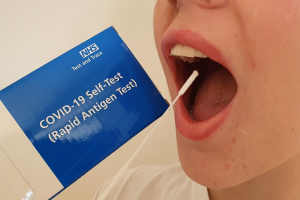
A couple of months ago, we covered the subject of whether or not businesses and organisations could mandate that employees receive the Covid vaccination. It was the hot topic at that time and you can see that post, and watch the presentation from our consultant Owen Lee here https://hrchampions.co.uk/covid-19/covid-the-vaccine-conundrum-277
Since then, the conversation has moved on and the latest question echoing around employers seems to be “Can I insist that employees take a Covid test?”.
Interestingly, this question is a little more nuanced than the vaccination question, and there’s no clear yes or no answer. Some may argue that stipulating a testing regime could be seen as invasive on a personal level, or potentially non-enforceable from a contractual point of view. There are fair arguments on both sides of the table, so it calls for a balanced approach.
Employers have a duty of care towards all of their employees and creating a safe working environment comes pretty high up the list. Lateral Flow tests are now free to order on the NHS and so as part of your return-to-the-workplace programme and/or your ongoing Covid safety regime, you might ask employees to test themselves on a regular basis. Perhaps a couple of times a week before putting themselves in a position where they will come into contact with colleagues or customers.
We would expect most employees to accept that some form of testing schedule may become part of our way of life, at least for a while, and so accept it in good spirit. Issues may arise however if staff members insist that they do not want to self-test or if you make testing, and returning a negative result, a conditional element of coming to work.
Making testing compulsory opens the “change of contractual terms” can of worms. If testing isn’t in your employees’ contracts, and it probably won’t be if you don’t work in care, making it conditional would be a change of terms for which a period of consultation would be required. You may already have a drug and alcohol testing policy in your staff handbook, but testing for infection is somewhat different.
As already mentioned, most people will understand and graciously accept self-testing, but what happens if they forget, run out of time or run out of tests? Is it acceptable to stop an employee coming to work because they were running late or had to drop the kids off before their test result had fully developed?
You could keep test kits at the place of work, but consider that you may have to pay staff whilst they sit idly around waiting for the results?
You may have members of your team who have to visit clients’ premises; engineers or delivery drivers perhaps. If your clients are insisting on negative tests before coming on site, you’ll probably be in a stronger position to enforce. There has already been a widely publicised case where a delivery driver was deemed to have been fairly dismissed after he failed to wear a mask when making a delivery to a Tayte & Lyle site.
Refusal to test then may mean you are unable to provide work for your employees leaving you with little option but to consider dismissal.
For those staff who usually work at a single premise such as an office or factory, it may be more difficult to insist upon testing where you have no recourse for refusal to test. Staff could work from home where that is practical, but is that fair on colleagues who may also prefer to work from home? You may also have staff who refuse to work with non-testers, exacerbating an already fraught position.
The deeper we delve for an answer, the more questions we seem to unearth. As with the vaccine question, encouraging staff and reaching an agreement to test is going to be the best approach. However there will always be a handful of cases where it’s less straightforward or individuals refuse to test because it enables them to manipulate a situation to their own advantage.
If and when this happened, we recommend make a judgement on a case by case basis. We’re here to help with that of course. Just call us on 01452 331331 or e-mail This email address is being protected from spambots. You need JavaScript enabled to view it.
The Great Post Office Scandal

Last week, 39 former Postmasters had their criminal convictions for theft and false accounting overturned by the Court of Appeal. They were amongst 736 Post Office Workers who were wrongly prosecuted by the Post Office between 2000 and 2014 for such allegations following the installation of a new accounting system, called Horizon, in 1999.
The court ruling highlights a culture of blame and arrogance that was, and arguably is, endemic within the Post Office, and that led to the most widespread, known, miscarriage of justice in the UK.
All organisations would do well to pay attention to the lessons that can be learned from this case in order to avoid any similar behaviour and failure towards their employees and associates.
To briefly précis the story, in 1999, the Post Office rolled out a new computer-based accounting system called Horizon, installing it in post offices up and down the country. Horizon was meant to simplify the lives of postmasters by replacing what was a largely paper-based system for recording stock, sales and transactions.
Soon after its installation, some postmasters started recording discrepancies in their accounting. Shortfalls started showing and the money for thousands of pounds worth of transactions could not be accounted for. For some, this started amounting to tens of thousands of pounds. The Post Office blamed the postmasters for these shortfalls, holding them personally responsible and demanding that the money be repaid.
Despite their protestations, some were forced into serious debt to repay the money, taking out loans and even re-mortgaging their property. Marriages broke down and some say the stress led to health conditions, addiction and premature deaths. Many postmasters were prosecuted and some even ended up being sent to prison. In short, many innocent lives were ruined.
* * * * *
The Post Office has its own Prosecution Department that pre-dates the Police. It can be traced back to 1683 and was formed partly to combat highwaymen. The presence of this department presents a significant conflict of interest as it means the Post Office is the prosecutor, the victim and the investigator of an alleged offence.
Consequently, throughout all of the prosecutions, at no time was the validity of the Horizon computer system ever doubted or bought into question. Indeed, the Post Office continuously stressed how robust the system was. Neither was it questioned why hundreds of previously reliable and law-abiding people suddenly became alleged criminals. The focus was entirely on retrieving the “missing” money.
This failure to question the Horizon system, to eliminate it as a potential contributing factor to the high number of people being investigated, is characteristic of an organisation that believes itself to be beyond reproach. A thorough and impartial investigation is the cornerstone of any action involving an employee. The one-eyed approach of the Post Office totally dissolved any trust.
We must question the leadership at the Post Office during the fourteen-year period that the prosecutions took place. The prosecutions were high profile and MPs had been alerted to the plight of some of the Postmasters. An independent review had been commissioned but this was then scrapped when it looked as though the result might leave the Post Office exposed.
In 2012, Paula Vennells was appointed Chief Executive of the Post Office. Here at last it seemed was an opportunity to sweep clean and have a fresh pair of eyes look into the situation. Ms Vennells wasn’t party to the implementation of Horizon back in 1999 and her new appointment presented an excellent opportunity to make good the errors of the past.
During our Leadership & Management training courses at HR Champions, we ask delegates to describe the characteristics of great leaders. Across different training courses and cohorts, some words come up time and again; typically:
- Integrity
- Courage
- Authenticity
- Honesty
- Fairness
- Inquisitiveness
- Resilience
- Empathy
Sadly, none of these qualities appear to have been present at the Post Office. Ms Vennells towed the corporate line and stuck to the position that there was no fault in the Horizon system. It seems, even as the evidence continued to stack up against the Post Office, there was a fear that the organisation would “lose face” if it now admitted that Horizon was flawed.
Following the Court of Appeals ruling, Ms Vennells quit her posts on the boards of Dunelm and Morrisons. There are now calls for her to be stripped of her CBE title which she was awarded for services to the Post Office and to charity.
It would be wrong to assume that the issues presented here could only ever be found in large organisations such as the Post Office. There are occasions when quite modestly sized businesses can be guilty of taking a maverick or bullish approach over how it handles situations involving employees and even customers. We’ve been called in on more than one occasion to deal with the aftermath.
Remaining objective in such circumstances, although difficult at times is key. Whilst acting in the best interest of the organisation remains primary, it cannot be done with a blinkered approach that leaves a business exposed to more serious consequences further down the line. Culture comes from the top down and the behaviour exhibited by board members and senior managers filters down throughout any organisation. We need to make sure that our culture reflects our values.
We can help in the development of your own organisation’s values and culture. Start a conversation with us now on 01452 331331 or email This email address is being protected from spambots. You need JavaScript enabled to view it.
NB. The BBC have an excellent documentary about the history of this case available to listen to via the BBC Sounds app. Well worth a listen. Just search "The Great Post Office Trial" in the app.
Employer Top Challenges

We’ve probably all come to accept that life is never going to return completely to how it was. There is plenty of talk and predictions over what the new normal will look like and there is also much hankering over getting back to the normal that we once knew just a year or so ago.
So far, as the roadmap out of lockdown gradually unfolds and more businesses and employees come back to the workplace, our message would be, “be careful what you wish for!”.
Despite some business being back at work for just a few weeks, we are already seeing a reprisal of disputes, claims and grievance issues that employers must deal with. As we find our feet in the new normal, there seem to be some individuals who want the best of both worlds; the flexibility of working in a new and innovative way whilst maintaining strict adherence to their employee rights. A bitter pill for the employers who had done their upmost to keep a business afloat and the employees in a job for the past year.
Without wishing to be pessimists, we’ve compiled what we think are the top hot-spots that employers will be facing over the coming months:
Redundancy and subsequent fallout: We expect a moment of truth for many businesses over the coming weeks and months. As the economy and the marketplace stabilises and the reduction in furlough support starts to bite, it’s going to be time to make those tough decisions that have been kicked down the road during lockdown. Once the effect of Covid on customer behaviour is assessed and understood, workforce planning will result in retraining and hiring for some but redundancy for others. If you’re affected by the latter, ensure your process is flawless to overt the risk of any claims.
Variation of contract: If you’ve put your staff on furlough at any stage then you’ve effectively already done this and should have had it agreed in writing. We provided a letter template for staff on furlough. Going forward, judging by media coverage, a lot of business are going to have to deal with contract variations as staff request new working arrangements. This could be new hours or working from home more. Variations to contract should be mutually agreed and in some cases preceded by a flexible working request. For businesses that have decided to close their offices and impose home working on their staff then some form of consultation should have been part of that process. Again, get new terms and conditions clearly laid out and agreed in writing.
Tribunal Claims: With job losses we expect Tribunal claims. No matter how good our processes and how well we follow procedure, we can’t stop employees submitting tribunal claims. As it is effectively free to do, if you’re a disgruntled employee who feels hard done by, you might just take a “what have I got to lose?” attitude in the hope of getting a payout. We hope that pre-tribunal judgements will throw out the spurious claims but it’s no guarantee. Following procedure and keeping everything appropriately documented to a water-tight standard will mitigate the risk. Don’t be the one that gets caught out because you cut corners.
Return of the SAR: We are seeing more cases of vexatious Subject Access Requests. A disgruntled employee may know they have been dismissed fair and square but they might also know the potential grief and turmoil submitting a SAR will bring. For any organisation, the resources and time it can take to respond can have a significant impact on productivity as it detracts from normal day to day tasks. Imagine having to collate all documentation and communications that reference an individual including Email, Teams, Twitter, WhatsApp, Slack or any other platform; not to mention hard copy notes and personal files. Imagine then having to redact all of that information so that no-one else’s personal information is compromised. It could be a truly mammoth job. Whilst we would like to see some legal ruling against vexatious SAR requests, we recommend that in line with GDPR rules it really is worth only holding the information that you really need and securely disposing of anything you don’t.
Getting on top of all of these issues and ensuring you have robust policies and procedure in place may seem like it’s even more work to do on top of everything that Covid is throwing at us. But think of the consequences of not doing it and the hassle and headache that will bring.
We’re on hand to lend support of course and we’re just a phone call or email away on 01452 331331 or This email address is being protected from spambots. You need JavaScript enabled to view it..
Sickness Absence Post Covid

One of the positive side-effects of the Covid experience has been that there has been less general illness in the UK workforce. Or, in Office of National Statistics speak, a reduction in working days lost to sickness absence. In fact, 2020 shows the lowest sickness absence rate, just 1.8%, since the data time series began in 1995.
Of course social distancing, shielding, working from home and furlough have all contributed to this reduction and we’re all washing our hands more often, sanitising and wearing masks. Coming out of lockdown however there will be more social interaction and therefore opportunity to spread illness. Also, just being back at work, out and about more and returning to sports is likely to lead to more personal physical injury, incapacitating workers.
With the Working from Home option looking as though it’s going to become an acceptable norm for many organisations, albeit to varying degrees, are businesses geared up and prepared to manage sickness absence in the post Covid world?
Surprisingly, there is no legal requirement for an employee to notify his or her employer that they will not be attending work due to sickness or injury. Instead, this would be a contractual obligation that is specified in an absence policy and would usually appear in the organisation’s staff handbook. Whilst it’s pretty standard practice for an employee to call in to their line manager if they’re sick, what is the expectation of staff who are working from home?
We’ve discussed previously how, with working from home becoming more prevalent, we might see a shift towards measuring productivity rather than hours in the office as a way to gauge employee contribution. There will be little incentive then for an individual to declare themselves absent if they feel they can still get their work done. Especially as declaring themselves as off sick will mean they are likely to suffer financially.
Historically, it’s accepted that if you’re not fit for work then you don’t come in. But if a member of staff, whilst unwell, can still drag themselves in front of their computer screen, they may consider themselves to be at fit enough for work. They may not be very productive, but if they’re in “attendance” then they’re probably going to expect to be paid.
On the other hand, if we are indeed measuring productivity, does the employee open themselves up for a performance discussion if they have not declared themselves sick, but their output suffers.
The complexity of this issue deepens further still when we involve the concept of presenteeism. You have doubtless heard reports that employees work harder and longer when at home because they feel they have something to prove. This in itself is self-defeating as over-work can be a contributor to stress and burnout which falls under the classification of Mental Health Conditions, one of the four main reasons for sickness absence in the UK for 2020; the top four being:
- minor illnesses (26.1%) - coughs, colds and flu; sickness, nausea and diarrhoea
- other conditions (17.1%) – the advised category for reporting coronavirus related illness
- musculoskeletal problems (15.4%) – back pain and limb problems
- mental health conditions (11.6%)
The danger is then that presenteeism contributes to sickness and health issues even when there is no requirement to be physically present.
It’s clear that absence policy and procedure will have to be updated to be enforceable and effective in the post-Covid working environment. As organisations settle into a routine over the coming months, we’re likely to see many such polices re-written to enable business to maintain robust and sensible management practices.
If you’re ready for a review of your policies and procedures, we can offer advice and support to ensure you’re covering all of the angles. Call us on 01452 331331 or e-mail This email address is being protected from spambots. You need JavaScript enabled to view it.
Maintaining Procedures

For over 12 months now we’ve been living and working in the most unpredictable of environments; one where the rules, at times, seem to have changed almost daily. We have had to learn to accept change on a huge scale and with home-working becoming the norm for very many of us, we’ve become more relaxed about dress-code and keeping to strict start and finish times.
At times like this, it can be very tempting and all too easy to take a more relaxed approach about some of the other rules and procedures that govern our behaviour in the workplace. So, on the brink of hairdressers, gyms, non-essential retail and outdoor hospitality re-opening, it’s a good time to remind ourselves about the importance of procedure and of maintaining certain policies and protocols.
Take disciplinary and grievance procedures for example which is probably the most commonly short-circuited policy. Just this week there was a case of a firefighter who was awarded over £12,000 at Tribunal following his dismissal. Not because his dismissal was unjust or unfair; indeed, the Tribunal stated that his actions warranted dismissal. But because the fire service that he worked for had failed to follow the Acas code of practice by leaving it too long, four months in actual fact, to hear his appeal.
By law, your disciplinary and grievance policy must be readily available for scrutiny by any employee and should ordinarily reside within your staff handbook. Make sure that your procedure is clear and unambiguous and plainly states the various levels of disciplinary action which is usually verbal warning through to dismissal.
All disciplinary matters should undergo a fair investigation in the first instance, and this would normally be carried out by a line manager. The investigation should gather all relevant evidence and interviews should be held with all involved parties and with anyone who is able to provide evidence for the case. This may be any number of employees or just the subject of the disciplinary matter. Under current restrictions, it’s fine to hold these interviews via Zoom or Teams.
You are still in the process of investigating at this stage, so for the disciplinary subject there is no right of representation. Moreover, you need to be very clear that no conclusion has been reached at this stage otherwise you may be accused of pre-judging the situation.
Once your investigation is concluded and if some form of discipline is required, you may then call the subject to a disciplinary meeting. You must give reasonable notice of a disciplinary meeting and we recommend at least 48 hours.
At the disciplinary stage the subject may be accompanied by a representative. Unless your policy states otherwise, and we recommend that it doesn’t, the employee’s representative may only be a work colleague or an “appointed representative” of a trade union; not simply a trade union member. If the employee chooses not to be represented make sure he or she is aware of their right and have this minuted.
Employees have a right to appeal any disciplinary decision and, unlike the case above, this should be heard in a timely manner and by someone at least equal in status to the disciplining officer.
Because of the difficult conversations that are usually involved it’s easy to see why disciplinary and grievance procedures are often carried it poorly, consequently becoming costly. However, you should apply rigour in all policies, procedures and processes. Redundancy, recruitment and Health & Safety are probably the most obvious, but failure in any can incur a cost.
Luckily we’re here to help and assisting with, attending and carrying out thinks like disciplinary procedures and redundancy processes for our clients is something we do a lot of. For help and support you can call us on 01452 331331 or e-mail This email address is being protected from spambots. You need JavaScript enabled to view it.
Do Stormy Times Await?

If you’ve been on one of our Leadership and Management training courses before, you’re probably already familiar with Tuckman’s Model. We mention it often and we’ve written about it on this blog previously. Simply put, Tuckman’s Model is a characterisation of the process that teams go through to reach a stage where that team becomes productive; as established by psychologist Bruce Tuckman in the 1960’s.
It’s relevant today because it’s likely that many teams will experience Tuckman’s Model, or a variation of it, as employees return to the workplace after Covid.
The stages of establishing a productive team, as described by Dr Tuckman are: Forming, Storming, Norming and Performing with a further stage of Adjourning latterly added. Below we’ve amended the traditional description for each stage of the model to reflect the challenges that organisations are likely to face considering the influences of the Covid and lockdown factors.
Forming: Ordinarily this stage describes when a team has just come together. Individuals are polite if perhaps a little reserved with one another as they learn and understand others’ job roles, ways of working and personalities. After lockdown we can expect this stage to be more about re-familiarisation as team members will most probably already know one another. However it’s likely that Covid will have forced a need for change in job roles as well as working practices so how the team fits together may have to be re-learned. There may also be new starters who will have the added task of learning and understanding the culture of the organisation. Insecurity and/or lack of clarity could create friction. In all scenarios, this is a crucial time for leaders to demonstrate strong guidance.
Storming: This is commonly a phase where conflict arises as team members now have the measure of one another and some push for supremacy or dominance. After becoming accustomed to a relaxed and sometimes solitary working from home environment, team members may struggle to accommodate others’ working styles and processes, leading to frustration. Leaders may find their authority challenged, particularly if previous rules and processes have waned or if new guidelines are still quite experimental and flexible whilst they become established. Storming can also occur when a new member joins a stable team and the dynamic shifts. This may be the result of a re-shuffle or new shift pattern necessitated by Covid and members must once again establish themselves and their positions.
Norming: Teams eventually become settled, differences resolve and individuals understand theirs and colleagues’ roles including any changes implemented to achieve the new normal. The chain of command is established and we move to a position where we see some real progress in attaining the team’s goals. Members will revert to relying on one another and feel able to ask for help from others. Depending on the vaccine rollout and Government hospitality restrictions, there may be opportunity for social interactions and friendships re-forming. It can take a while to reach the norming stage, however some teams have been here before so it may not be such an uphill battle. Furthermore, we’ve gone through 12months of constant and at times quite dramatic changes, the experience of which may help team members adapt quickly and reach the norming stage sooner.
Performing: Eventually we should get to a stage where the team is achieving what it was set up to do and should accomplish this without conflict or resistance. A sign that the team has reached this stage is when it continues to function effectively in the absence of its leader. A performing team should be able to continue effectively even if team members come and go or new challenges are presented that it can overcome autonomously.
Adjourning: This stage can occur if the team was set up to complete a specific task which it achieves and is subsequently disbanded. It can also occur when outside influences cause the team to be restructured or broken apart. Many teams would have experienced this phase over the last 12 months when Covid restrictions affected their organisation or workplace. This can be a difficult stage for some people, especially when strong friendships have been formed, and very probably contributed to cases of mental health issues during lockdown; which is why it is sometimes referred to as “mourning”.
We shouldn’t make the mistake of thinking things will just go back to the way they were before and everything will just pick up where we left off. We should be prepared for people’s attitudes and approaches to have changed over the last 12 months and this will affect the way they interact with other team members. Remember some people may have lost loved ones to the pandemic or been seriously ill themselves.
Like everything else we’ve been through this last year, returning to work and reforming teams is going to be a new experience, so Tuckman’s Model won’t be an exact fit. However, recognising that your team is likely to go through some process that is similar to it will make your management more effective as it will enable you to implement tactics to progress to the performing stage more quickly.
Tuckman’s model is discussed in a number of our Leadership & management courses, and you can still attend these for free if your business is in Worcestershire, Swindon & Wiltshire, Bristol and now Somerset & Devon.
Effective leadership is required more than ever to integrate teams back into the workplace, working together and moving through the model to be at the very least norming, but ideally performing.
Remember, we can also support you with team management and associated documents including Contracts of Employment and Staff Handbooks. Call us on 01452 331331 or e-mail This email address is being protected from spambots. You need JavaScript enabled to view it.