

Super User
Demonstrate Business Optimism through Training

As we approach 2026, businesses across the country are contending with an economic climate that is feeling increasingly constrained. The ongoing impact of the employers’ National Insurance increases which took effect in April, combined with the further pay rises announced in the latest Budget for implementation next spring, is applying additional financial pressure across virtually every sector.
Some large employers have already warned of significant extra labour costs, but for SMEs, who make up the vast majority of UK businesses, the strain is even more acute.
It is little surprise that the media has been reporting a marked slowdown or outright freeze in recruitment, with the ONS stating that vacancies are 12% down for August to October, compared to the same period last year.
It seems many organisations are choosing to “sit tight”, deferring hiring decisions, delaying expansions, and pausing investment in new roles. Even more concerning are the increasing numbers of business closures being announced, particularly in the hospitality industry, where rising wage costs, energy prices, and reduced consumer spending have created a perfect storm.
Although the Government continues to promote apprenticeships and invest in skills initiatives, these measures alone may not be enough to break the current economic deadlock. When organisations are fearful of committing to new spend, their suppliers, partners, and collaborators naturally experience knock-on effects. A sluggish hiring market becomes a sluggish trading environment; and the cycle continues.
Periods of organisational stagnation are not invisible to employees. When teams see recruitment frozen, budgets tightened, and development paused, speculation naturally grows. Morale can deteriorate quickly, productivity can slip, and high performers may begin to question their future with the organisation.
This makes it especially important for employers to demonstrate momentum, intent, and investment, even when trading conditions are challenging. One of the most powerful mechanisms for doing so is structured development, particularly leadership and management training. Not only does it support the performance and capability of the organisation; it provides reassurance to employees that the business remains committed to growth and to their long-term careers.
In a climate where every percentage point of productivity matters, organisations simply cannot afford the operational drag caused by managers who lack the confidence or skillset to drive team performance.
We often comment on how issues caused by undertrained managers, such as poor handling of difficult conversations and ineffective performance management will cause unnecessary distractions and harm productivity.
Leadership Training should be viewed as a strategic investment that is implemented continuously. It delivers three critical benefits for organisations navigating the current economic uncertainty:
- It signals commitment and stability.
Employees who see investment in training understand that the organisation is preparing for the future rather than retreating from it. This increases confidence, reduces anxiety, and boosts discretionary effort. - It strengthens capability exactly when it is most needed.
Challenging trading conditions demand exceptional leadership. Effective managers know how to address underperformance, maintain accountability, resolve conflict, and keep teams focused; skills that are rarely innate and must be developed through training. - It positions the business to accelerate when the market improves.
Organisations that invest in upskilling now will be the first to seize opportunities as conditions ease. Having managers and teams “primed and ready” ensures you can scale, recruit, or diversify faster than competitors who simply remain in a “holding pattern”.
If you have not yet scheduled leadership or management training for your managers, now is the time to act. Many of our most forward-thinking clients have already booked places on our training programmes commencing in January, and we are prepared to release additional places should demand require it.
By making this commitment before Christmas, you can ensure that your teams enter the New Year feeling valued, motivated, and optimistic; confident that their employer is investing not only in their development but in the future success of the organisation.
Now is the moment to act. Equip your managers with the skills to lead effectively, support productivity, and help pull your organisation out of the current economic stall. When the upturn comes, as it inevitably will, your business will be ready to move first.
Contact HR Champions today to reserve your training places for 2026. Call us on 01452 331331, or complete the contact form.

Time to Rethink the Office Party?

For decades, the office Christmas party has been an institutional fixture in the average company’s calendar and perhaps something of an expectation amongst employees. Venues canvassed for bookings increasingly earlier in the year advertising more varied Christmas party themes to offer something the same, but different. It could be described as a cultural hallmark of working life.
In recent years however, we have noticed a decline as many employers, and indeed employees question whether the traditional Christmas party still has a place in the modern workplace, or has it become something of a relic of a different economic era.
We should question what the Christmas party is really for. At best, it could be seen as a reward for a year of hard work; a collective “thank you” from employer to employee. It offers an opportunity to build relationships, strengthen team bonds and boost morale outside the constraints of day-to-day working life. For some organisations, however, it is simply tradition: an expected social event funded by the business to meet employee expectations instead of considered engagement or reward strategy.
Today, its decline appears to be driven by a combination of practical, cultural and economic factors. One of the most significant is the shift in how and where we work. With dispersed and hybrid workforces now the norm for many organisations, the logistics of bringing everyone together are more complex and less inclusive. When a significant proportion of employees work from home, are geographically spread or operate flexible hours, a single physical event no longer reflects the workforce as it once did.
There has also been a notable cultural shift. The traditional Christmas party grew out of a more manufacturing-based economy where colleagues worked fixed hours, side-by-side, often for many years. Today’s workforce is more transient, diverse and individualistic. Younger generations in particular are often more health conscious and less focused on alcohol-centred socialising.
The rise of social media has also changed behaviour; the fear of a drunken Instagram moment being captured and shared online has undoubtedly dampened enthusiasm for some. For others, there is simply an apathy towards socialising with colleagues at all; work is work, and personal life is personal.
Economic pressure cannot be ignored either. Many employers are still feeling the impact of the National Insurance increases, National Minimum Wage rises and ongoing cost pressures, with more to come next year. With this in mind, an office party complete with food, venue hire and a paid bar can add up to an unaffordable luxury. For organisations fighting to protect margins, a “nice-to-have” social event is often one of the first things to be crossed off the list.
There is also the growing burden of compliance and risk. Only this morning, HMRC issued an invitation to a webinar on how to treat social functions and staff parties for tax purposes, a reminder that even goodwill gestures come wrapped in regulation.
And of course, there are the well documented risks of alcohol-fuelled events: disputes between colleagues, complaints of inappropriate behaviour, and the need to consider employees who do not drink or do not celebrate what is ultimately a religious festival. For many employers, the potential aftermath, disciplinary issues, grievances or reputational damage, simply outweigh the perceived benefit.
In this context, it is hardly surprising if businesses opt for safer, simpler alternatives. A modest Christmas bonus paid through payroll, or an equal-value Amazon voucher for all members of staff. Such options are predictable, less risky, easier to administer and, possibly most importantly in this day and age, unlikely to offend anyone. However, they also lack the human connection that the Christmas party, at its best, once provided.
None of this diminishes the importance of recognising and rewarding employees. If anything, it reinforces the need to think more carefully about how we do it. Motivation and morale cannot be sustained through a single annual gesture that rewards everyone equally, regardless of contribution.
True engagement is built through consistent, meaningful leadership throughout the year, through feedback, recognition, development opportunities and supportive management.
Organisations should move away from relying on one seasonal event to do all the heavy lifting of employee appreciation. Instead, they should adopt an ongoing approach to motivating teams, encouraging collaboration and celebrating success in real time. This requires confident, empathetic managers who can lead people, not just manage processes.
Developing these leadership and management skills is precisely what we aspire to at HR Champions, through our progressive training programmes, including our soft-skills workshops and ILM-accredited courses.
To truly motivate and reward your team, invest in training your managers to deliver consistent, supportive and effective leadership. Contact us now to discuss your Leadership and Management training for 2026 and beyond. Call us on 01452 331331, or complete the contact form.
Budget 2025: The Hidden Impacts

While political commentators have spent the past 24 hours or so dissecting the big-picture messages of this week’s Budget, we’ve taken a different approach. Rather than focusing solely on the headline economic gloom, we’ve tried to read between the lines a little and uncover several employer impacts that may not have been fully considered but could have significant consequences for UK businesses over the coming year.
One of the most notable of these is how another rise in the National Minimum Wage has closed the gap even further between the age bands, favouring younger workers.
At first glance, it may appear simply as a routine annual adjustment that is trying to be fair and progressive. However it risks changing the commercial logic behind entry-level hiring.
Furthermore, when combined with the forthcoming Workers’ Rights Bill, and the new rules regarding zero hours contracts and day-one rights, it has the potential to materially reshape recruitment decisions and workforce planning across the country.
If the cost difference between a 19-year-old and someone who is 35, or maybe 50 or 60, becomes marginal, many employers may potentially gravitate toward the older, more experienced option; particularly in sectors where every labour cost must justify its value.
Older or returning workers typically bring:
- An understanding of the unwritten expectations between employer and employee
- Stronger appreciation of workplace boundaries, including personal phone use, breaks and behaviour
- Better-developed customer service instincts, including diplomacy and patience
- More reliable working habits, such as punctuality and notice for time off
- Greater health resilience, as they tend to experience fewer short-term illnesses
Younger workers have enormous potential, but also require more training, more supervision and more time to develop professionalism. If the wage difference no longer offsets this investment, employers may think twice.
How will young people learn the skills and ensure they are career ready and employable if they can't develop work skills whilst doing part time jobs.
It’s also important to remember that businesses are still dealing with the National Insurance increases introduced in the last Budget. Payroll costs have steadily climbed over the past 18 months, leaving many employers reworking budgets and hiring plans and even restructuring, just to stay afloat.
The new minimum wage rise adds yet another layer of cost pressure, particularly painful for SMEs, social enterprises and organisations with a high proportion of entry-level staff.
But the Budget’s impact does not stop with the workforce. It’s bound to shape consumer behaviour too.
With household finances tightening due to inflation, frozen personal allowances and rising living costs, customers now have less disposable income. This creates significant challenges for sectors such as:
- Hospitality
- Leisure and entertainment
- Retail
- Tourism
These industries rely heavily on discretionary spending, the very thing being eroded in real terms. Yet, with their own operating costs rising, businesses cannot simply cut prices to stay competitive. Something else has to give.
To stay competitive, businesses will need to focus on efficiency, productivity and performance management. AI and automation can play a role, but they cannot replace strong leadership.
Managers must be able to:
- Lead teams through uncertainty
- Set clear, ambitious but achievable objectives
- Motivate employees who may be feeling financial pressure
- Coach employees to perform to their best standard first time
- Hold staff accountable for productivity
- Maintain morale and engagement
- Communicate expectations confidently and clearly
These skills do not appear by accident; they must be learned and reinforced.
Our ILM Leadership & Management programmes are designed precisely for this purpose. They give managers the practical tools and mindset to get the best out of their teams and maintain performance even when economic pressures intensify.
The real impacts of this Budget will not unfold overnight; but they are coming. Businesses that invest today in strong, capable managers will be the ones best placed to adapt, compete and thrive through the challenges ahead.
Contact HR Champions now to discuss the best training options for your organisation and ensure your managers are fully equipped for the year, and challenges ahead. Call us on 01452 331331, or complete the contact form.
Why Clear Communication Matters

In any organisation, clear and consistent communication is fundamental. Businesses rely on it to coordinate teams, make decisions, build trust and maintain momentum. When communication breaks down, be that through mixed messages, vague instructions or sudden changes in direction, productivity suffers, confusion grows and people quickly lose confidence in their leaders.
In simple terms, no business can thrive, grow or function effectively without clear, unambiguous communication at every level.
We were recently, given a public example of what unclear communication looks like, when, during her unprecedented pre-budget speech, Chancellor Rachel Reeves strongly hinted that difficult decisions were coming and that Income Tax rises were very likely. Indeed, the media and political commentators were in no doubt.
Within days however, the messaging shifted. What looked like a firm warning was thrown into reverse. This triggered uncertainty in the markets. Bond yields jumped, the pound weakened, and investors lost confidence; with millions of pounds wiped off pension funds and portfolios.
This isn’t a political judgement. It’s an illustration of how inconsistent or premature communication can trigger uncertainty and undermine confidence. In this case, the mixed signals caused turbulence in the financial markets, and a degree of unnecessary alarm.
Now imagine the same pattern inside your workplace.
Inconsistent or unclear messages from management can have a profound impact on employees and organisational performance. When a manager says one thing on Monday, hints at something different on Wednesday and reverses course by Friday, the workforce will be thrown into disarray and problems are bound to arise:
- Decision paralysis: Teams cannot make confident choices when they are unsure of the direction of travel.
- Second-guessing and doubt: Employees waste time trying to interpret “what the manager really meant” instead of focusing on their work.
- Fear of getting it wrong: Ambiguity creates anxiety, which affects performance and morale.
- Conflict and misalignment: Different people interpret vague instructions differently, leading to inconsistency, friction and finger-pointing.
- Loss of trust: When communication repeatedly shifts, employees lose faith in the message: and often in the messenger.
Modern workplaces amplify these risks. With email, Teams chats, instant messaging, WhatsApp groups and hybrid working, leaders must be even more deliberate and disciplined in how they communicate. A quick message sent “on the fly” can cause real confusion when employees rely on accuracy to do their jobs.
Just as importantly, people have different communication styles. Some favour detail and structure; others prefer brevity and directness. Some need verbal explanation, while others want written confirmation. A one-size-fits-all approach is rarely effective, especially in a diverse team.
Good communication, therefore, isn’t just about what you say. It’s about how, when and to whom you say it.
Here are five principles of clear workplace communication; essential habits every manager should master:
- Be Clear and Unambiguous: Say exactly what you mean. Avoid vague language or assumptions. Take the view that if an instruction can be misinterpreted, it will be.
- Be Consistent in Your Messaging: Stick to decisions once communicated and, if circumstances change, explain why. Consistency builds trust. Explanations of why helps educate others to understand your decision process and rationale.
- Consider Your Audience: Adapt your style to match the needs of the individuals you are communicating with.
- Choose the Right Channel: Whilst an audit trail can be desirable, not every message belongs on WhatsApp or in a rushed email. Use the most appropriate and reliable medium.
- Check Understanding - Don’t Assume it: Invite questions. Confirm clarity. Ensure everyone understands the same message.
Clear communication is not simply a “nice to have”, it is a core leadership competency that shapes performance, culture and success.
At HR Champions, communication skills run through the heart of our Leadership & Management programmes. Whether we are discussing leadership styles, team dynamics or staff motivation, the ability to communicate clearly underpins everything.
We also offer a dedicated Workplace Communication workshop, ideal for in-house delivery. This allows organisations to establish shared communication standards, agree protocols and develop a consistent approach that works across the whole business.
If your managers would benefit from stronger communication skills, structured leadership development or a clearer understanding of how to convey messages with confidence and consistency, get in touch with today to arrange a Workplace Communication Workshop or explore our ILM Leadership & Management programmes. Call us on 01452 331331, or complete the contact form.
What Makes a Great Leader?

It’s been another lively week in Westminster, with headlines once again dominated by the subject of leadership. Press briefings from some anonymous sources in Downing Street suggested that Prime Minister Keir Starmer was prepared to “stand up to any challenges” to his position.
The news sparked rumours of an imminent leadership challenge, which has not been forthcoming. It has however reignited debate over Sir Kier’s leadership credentials.
Was this story a genuine sign of strength, a leader showing resolve? Or was it a political distraction from the more pressing issues of the week, such as the prisoner release scandal or the growing speculation over the forthcoming Budget and the prospects of broken manifesto pledges?
Whichever side of the argument one takes, news such as this raises questions about the nature and perception of leadership itself.
It’s pretty standard on our (and I suspect other providers’) Leadership & Management training courses, to generate discussion amongst delegates about what traits and characteristics make a good leader.
When we ask the question, we hear familiar words — vision, integrity, self-belief, charisma, passion. But without fail, one phrase always emerges: the ability to create followers.
A leader, by definition, must have followers. They inspire belief, trust, and commitment in others; not through authority alone, but through credibility and purpose. Which, in the sphere of the current media storm, leads us to the question, has Keir Starmer truly created followers?
That’s not a political critique but a leadership one. Is his style inspiring people to rally behind a shared vision, or are they simply following out of necessity or party loyalty? The distinction is subtle, but in leadership terms, it’s everything.
Analysing leadership isn’t always comfortable. When we ask delegates to name “great leaders,” one of the most controversial names that often comes up is Adolf Hitler. Nobody, of course, supports his ideology or actions, yet his name surfaces time and again because, from a purely leadership perspective, he demonstrates a key quality: the ability to create followers on a massive scale.
This example usually triggers a passionate discussion, but it underlines an important truth. Leadership isn’t inherently good or bad, it’s neutral. The morality comes from how it’s applied.
Hitler’s rise was partly a result of circumstance; economic depression, national despair, and public disillusionment. But his ability to communicate a vision and unite people behind it was undeniably powerful; although it transformed to a regime of fear over time. As disturbing as it may be, this example helps us understand how influence, timing, and conviction shape leadership outcomes.
The reason we examine leadership traits, both positive and negative, is to recognise what influences people to follow others. Once we identify those behaviours, we can assess which exist within ourselves and which we need to strengthen or manage differently.
By cherry-picking the best qualities from respected leaders, confidence, empathy, authenticity, decisiveness, we can build our own leadership styles that fit the needs of our organisations and the people we lead.
Leadership development isn’t a one-time exercise. It’s a journey, one of constant learning, reflection, and adjustment.
At HR Champions, this philosophy underpins all of our training. Across our ILM Leadership and Management programmes, we help managers and emerging leaders explore their personal leadership styles, test their assumptions, and develop practical tools to lead confidently and authentically.
Through lively discussion, real-world examples, and peer-to-peer interaction, delegates discover that leadership isn’t about hierarchy, it’s about influence, integrity, and the ability to unite people behind a common purpose. Our ILM training provides a framework for that journey, from foundational management skills to advanced strategic leadership. Whether you’re leading a team, a department, or an entire organisation, our courses help you become the kind of leader others choose to follow.
One of my favourite phrases is that promoting your best salesman will produce your worst sales manager. This is because the two roles require very different skills and characteristics. Creating rapport and relationships with customers is very different from the inspiring and leading a team behind a common goal.
With continuing economic uncertainty and Royal Assent of the Workers Right’s Bill imminent, Leadership matters now more than ever. If you want to build a culture of trust, purpose, and motivation in your organisation, invest in developing confident, capable leaders who can truly inspire.
Talk to us about how our ILM Leadership & Management programmes can support you and your managers through the leadership journey. Call us on 01452 331331, or complete the contact form.
Traitors: Why Unclear Leadership Breeds Chaos
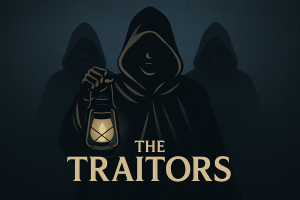
The BBC television programme Traitors has gripped the nation once again, combining psychological tension, strategy, and social politics in a way that only reality TV can. This has been heightened in the celebrity version because it’s people we know something about. But behind the drama of cloaks, clandestine gatherings and banishments lies a fascinating study in leadership, group dynamics, and human behaviour; lessons every manager and business leader could learn from.
At first glance, the game is simple: a group of “Faithful” contestants must identify and eliminate the hidden “Traitors” in their midst. Yet, just like in many workplaces, the absence of clear leadership and direction quickly leads to confusion, mistrust, and misplaced priorities.
In Celebrity Traitors, leadership is informal. No one is officially in charge, but everyone wants influence. Contestants naturally step up, trying to steer discussions, coordinate votes, or promote group harmony. Yet many hesitate, fearing that standing out might make them a target. In the show’s context, either option may result in being “murdered” by the Traitors overnight.
In the workplace, it’s not quite so dramatic, but the same pattern often emerges. In teams where leadership isn’t clearly defined, people hold back. Potential leaders self-censor for fear of conflict, being undermined, being perceived as too assertive or even intimidating. The result? A vacuum of authority where uncertainty thrives, progress stalls, and individuals are ‘in it’ for themselves.
When nobody takes ownership of direction or decision-making, objectives become blurred. Everyone’s working hard, but not necessarily together. Does any of this sound familiar?
Another interesting element of The Traitors is how heavily participants rely on body language. As suspicions grow, subtle gestures such as crossed arms, nervous fidgeting and forced smiles become sources of interpretation and often mis-interpretation. Faithful contestants often try to “signal” their innocence through exaggerated behaviour, over-smiling or speaking in overly calm tones, desperate to communicate that they are trustworthy.
It’s a fascinating reflection of the workplace. Managers and colleagues constantly read non-verbal cues: who’s engaged, who’s defensive, who’s hiding frustration or insecurity. But just as in The Traitors, those signals can be misleading. Overcompensating behaviour, nervous energy, or simply poor communication skills can create false perceptions, leading to poor judgements and decisions, misplaced trust, and unnecessary conflict.
Effective leaders know to look beyond body language. They combine empathy with objectivity; asking questions, observing patterns, and avoiding snap judgments. They understand that authentic communication, not guesswork, is the foundation of trust.
The “Traitors” themselves are fascinating from a leadership psychology perspective. They rarely need to take overt action to cause chaos. A quiet word, a subtle nudge, or a well-timed question is often enough to seed doubt and turn allies against each other.
In business, the same dynamic can occur. Not through malice necessarily, but through the absence of clarity. When leaders fail to set clear expectations, communicate strategy, or align their teams around shared and common goals, uncertainty will creep in. Minor misunderstandings grow into major disputes, and once cohesion is lost, productivity soon follows suit.
In The Traitors, this uncertainty is the traitors’ greatest weapon. In a workplace, it’s the silent killer of engagement and morale.
The truth is, there’s no guaranteed sustainable success, whether that’s in a castle or in a business, without clear, capable leadership. Defined roles, measurable objectives, and confident decision-making create stability, purpose, and trust. People follow leaders not because they have to, but because they believe in their competence and integrity.
Without it, even the most talented teams descend into finger-pointing and confusion, just like the Faithfuls turning on each other at the Round Table.
At HR Champions Ltd, we understand just how vital strong leadership is. Our ILM-accredited Leadership and Management courses equip managers with the tools, confidence, and mindset to lead effectively. Not just to make decisions, but to inspire others to follow them. We also offer targeted training in communication, conflict management, and emotional intelligence; the real-world skills that keep teams cohesive and productive.
Whether you’re in a boardroom or in a castle in the Scottish Highlands, clarity, confidence, and communication win the game every time.
Don’t Be a Traitor to Your Employees or your organisation; invest in proper, recognised training that produces positive outcomes. Contact HR Champions Ltd today to discover how our ILM and Leadership Development programmes can turn your managers into true leaders, the kind your teams will trust, follow, and respect. Call us on 01452 331331, or complete the contact form.
Good Intentions vs Bad Legislation

A story that caught our eye this week is that of Tom Boyd, a 27-year-old autistic man who volunteered at a branch of Waitrose for over four years, clocking up more than 600 hours stacking shelves and moving stock. His mother had asked if he could be offered a few paid hours In recognition of his work.
Waitrose head office responded by halting his volunteering, citing the reason that they were worried about the implications if he were to join the payroll.
At first glance, the reaction seems cold and harsh, and Waitrose certainly received some flak on social media and forums. However, from a business compliance perspective, we have some sympathy with what Waitrose did.
The tragedy here is that there is no provision in UK employment law for a middle ground. No mechanism to pay a token allowance or stipend to volunteers with disabilities who contribute meaningfully but cannot fulfil the full duties of a role independently.
There are some Government backed schemes and initiatives available that try to bridge the gap and Mr Boyd may have been utilising one of these or possibly a charity run scheme. But, in terms of how employers must treat workers in such situations, it’s pretty much a binary choice:
- Either maintain a strictly unpaid volunteer relationship, or
- Employ the individual fully under all statutory obligations.
This rigid framework means that businesses, large or small, must take steps to protect themselves. Waitrose almost certainly ended Tom’s volunteer arrangement to avoid a potential compliance time bomb. It may look heartless, but the alternative could have been a financial and reputational disaster.
In the UK, a volunteer does not have the same employment rights as a paid worker. Volunteers, by definition, will work for free and so are not entitled to the minimum wage or many of the protections afforded to employees. The law draws a clear line: if an individual is paid (or becomes a “worker” or “employee”), minimum wage and employment status protections apply, such as working time regulations, obligations around health & safety and access to sick pay.
Furthermore, it is our understanding that, in Mr Boyd’s case, he required constant supervision in his volunteer role and this would most likely extend to an employed position too if he was offered a permanent role. This raises the concept of “reasonable adjustments” under the Equality Act 2010.
Without knowing the full details, it is probably unlikely that Waitrose would see providing constant supervision as being a reasonable adjustment to make.
There’s no denying the value of work for an individual’s mental health and sense of purpose. According to the Office for National Statistics, more than 2.8 million working-age people are now economically inactive due to long-term health conditions, a figure that has risen sharply since the pandemic. Individuals without the structure, social contact or purpose that a job brings, are more likely to suffer from depression and anxiety, underlining the vital link between work and wellbeing.
However, this case illustrates the often unworkable balance employers face between inclusion and compliance. Businesses that want to do the right thing risk being penalised by a system that provides them with no safe way to do it.
Let’s be frank; if a small business found itself in Waitrose’s position, would it have the legal expertise or HR capacity to navigate the risks? Would managers know what legislation says, what constitutes “employment,” and what the consequences of getting it wrong could be? It’s a treacherously grey area, and that’s where the real danger lies.
At the end of the day: while it is deeply disappointing that Tom Boyd’s volunteering role was terminated when he asked to be paid, the situation highlights a lack of legislative flexibility rather than a lack of goodwill. Ultimately, businesses need to make money and so must ensure that any efforts to be charitable and support individuals, doesn’t expose the business to risk.
Interestingly, whilst writing this post, it has come to light that in response to the news story, the local Asda store has offered Mr Boyd a position comprising two, five-hour paid shifts per week. This is a very generous offer from Asda who, one assumes, has made the necessary risk assessments and are comfortable making any required reasonable adjustments.
In the meantime, perhaps this story will inspire somebody in Government to propose legislation that enables people like Mr Boyd to work and earn fair compensation for the contribution that they make, whilst benefiting from the positives that having a job brings.
At HR Champions Ltd, we strive to ensure that managers understand the boundaries. Our Mental Health for Managers course helps managers support wellbeing while remaining compliant. Our Mental Health First Aider training builds understanding and empathy in nominated employees, and our ILM-accredited Leadership and Management courses give managers the fundamental grounding in employment law they need to avoid costly oversights or mistakes.
When good intentions meet bad legislation, knowledge is the only real protection.
Contact HR Champions today to learn how we can help your managers build confidence, capability, and compliance through our comprehensive suite of training solutions. Call us on 01452 331331, or complete the contact form.
Spotlight on Workplace Investigations

News this week that the case against two British government employees accused of spying for China has collapsed, has left many of us bewildered. The Crown Prosecution Service dropped the charges, not because there wasn’t a case to answer that secrets were being shared, but because the government couldn’t, or wouldn’t, firmly state that China is an “enemy” or “threat.” The mind boggles.
Surely, if there is reason to believe that sensitive government information has been handed to a foreign power, whether that case goes ahead or not should not depend on a legal technicality about how that foreign power is defined.
This bizarre and frustrating outcome perfectly illustrates how a case, no matter how serious, can fall apart on a technicality; when the evidence, definitions, or underlying logic simply don’t hold up under scrutiny. And while most of us won’t be dealing with matters of national security, the same principle applies in the workplace. We’ve seen it happen.
When conducting a workplace investigation, such as an alleged misconduct, a grievance, or a disciplinary issue, every detail matters. Facts must be clear, procedures must be followed, and conclusions must be supported by evidence.
If an investigation is based on opinion, assumption, or incomplete information, the organisation risks making poor decisions, facing legal challenges, and losing the trust of its employees.
Effective workplace investigations, when they are required, are crucial in delivering fair and consistent management. Done well, they protect both the employer and the employee. Done poorly, they can lead to chaos. Just as the CPS’s failure to prepare a watertight case resulted in embarrassment for the government, a company’s failure to prepare properly can result in tribunal claims, reputational damage, or even the reinstatement of a dismissed employee and potentially, a compensation payment.
In modern, lean businesses, managers are often the first line of defence in dealing with issues of conduct or grievance. Yet in our experience, many lack the confidence or training to handle investigations effectively. Too often, they simply “wing it,” relying on instinct rather than proper process.
Those with the luxury of an HR department, might choose to delegate entirely to HR, on the assumption that only HR professionals can handle investigations correctly. This not only slows down a process that is best dealt with at the ‘coal face’, but can increase the risk of inconsistency, as more work is dumped on what is probably an already busy department.
Organisation need to develop a workforce where investigating managers are able to approach each case with clarity, discipline, and an evidence-based mindset. The key skills they must develop include:
- Fact-Finding and Objectivity: Managers must focus on verifiable facts rather than workplace gossip or personal perceptions or opinion.
- Effective Questioning: The ability to ask open, neutral questions that reveal the truth without leading the witness.
- Analytical Thinking: Assessing statements, identifying contradictions, and recognising when something is at cross-purposes or doesn’t add up.
- Confidentiality and Compliance: Protecting all parties by handling information sensitively and lawfully.
- Structured Report Writing: Producing clear, logical, and legally compliant investigation reports that can stand up to challenge.
Inadequate preparation or unclear evidence can completely undermine even the most serious of allegations. Just as the CPS discovered, you can’t reach a fair or defensible conclusion without absolute clarity about the facts and your ducks lined-up. In a business context, that could mean the difference between a justifiable dismissal and a costly unfair dismissal claim.
At HR Champions, we’ve seen time and again how untrained managers can become a liability simply because they weren’t equipped to handle investigations correctly. That’s why we deliver a cost-effective, one-day Workplace Investigations course, which can be run in-house for all managers and support staff; people you rely upon for note taking, for example. The training equips delegates with the skills and confidence to conduct professional, unbiased, and legally compliant investigations, ensuring that the truth is uncovered and decisions are defensible.
When it comes to investigations, “that’s near enough” just won’t cut it. Whether it’s a national security trial or a misconduct hearing, cases succeed or fail on the strength of their evidence, preparation, and process.
So, before you have a case arise, and it collapses under the weight of uncertainty, make sure your managers are pre-armed and have the skills they need to investigate effectively and fairly already in their arsenal.
Contact HR Champions today to discuss how we can help your organisation develop confident, capable managers who can unearth the facts, not the fiction. Call us on 01452 331331, or complete the contact form.
Don't Get Caught Out with Day-One Rights

We’ve been talking a lot lately about the upcoming Workers Rights Bill, and for good reason. It represents one of the most significant changes to UK employment law in recent years. At the heart of the legislation is the “day-one rights” clause, which will extend protection against unfair dismissal to employees from the very start of their employment.
This is a significant shift from the current legislation, where employers have up to two years to dismiss an employee without the risk of an unfair dismissal claim. What you need to know is that the proposed change will be retrospective. This means it will apply not just to new recruits but also to existing employees who are currently within their first two years of service.
What this means for employers is that underperforming or disruptive staff who are still within the two-year window could soon become much harder, and more expensive, to dismiss.
This legislation is not a distant possibility. The concept of day-one rights for workers was a Labour Party manifesto pledge, which means the Government will not want to be seen rescinding on their promise and so is committed to making it become law. Despite strong resistance in the House of Lords, the measure was eventually accepted with the caveat of what is being described as a “light-touch” dismissal option within the first six months of employment.
The trouble is, no one has been able to define what this “light-touch” approach really means, and probably, no-one one knows. It just sounds like a good phrase that will keep the resistors appeased.
Without clear guidance however, employers will be unable to plan with confidence. What we do know is that once the bill receives Royal Assent, potentially as soon as next month, employers will have to comply. The uncertainty only adds urgency for employers to act now.
Employers have long relied on the two-year window as a safeguard against poor hiring decisions or underperforming staff. Whilst we have always condoned and promoted a robust and properly implemented probation policy, the two-year rule has always been something of a backstop. Removing this buffer though, could lead to several consequences:
- Reduced appetite to recruit: Employers are likely to become hesitant to take on new staff for fear of being stuck with someone unsuitable.
- Increased tribunal risk: The scope for unfair dismissal claims will expand overnight. Compensation awards in unfair dismissal cases averaged nearly £14,000 last year, with maximum payouts reaching almost £180,000. Discrimination awards can be even higher.
- Employees playing the system: No-one wants to dismiss a good and productive employee, but there are those who deliberately do the bare minimum, or less. Knowing they will be difficult to dismiss gives no incentive to new employees to perform well and excel in their roles.
If you currently employ staff who are within their first two years of service and you have doubts about their performance, behaviour, or overall fit, now is the time to examine them closely, and where necessary, act. Waiting until after the new law takes effect could mean these individuals gain unfair dismissal rights overnight, leaving you exposed to legal claims if you try to remove them later.
However, employers still need to tread carefully. Tribunals will still expect to see evidence that employees were given a fair chance, appropriate feedback, and support. Managers should ensure that they have carried out training, appraisals, one-to-one meetings, and documented performance discussions. This evidence not only demonstrates fair treatment but also strengthens the employer’s position if dismissal becomes necessary. And to be fair, it’s what good managers and employers do anyway.
On an individual level, dismissing someone is rarely easy. Managers need to be prepared to hold difficult conversations about performance, suitability, and more sensitive issues such as personal conduct. Avoiding or delaying these conversations risks leaving problematic employees in place, which will soon be much harder to reverse.
The reality is that too many managers have never been properly trained to handle performance concerns, probationary reviews, or disciplinary conversations. That’s where targeted training becomes essential.
At HR Champions, we deliver specialist training to equip managers with the confidence and skills to tackle underperformance head-on. Our “Holding Difficult Conversations” programme helps managers address sensitive issues directly, constructively, and fairly; whether the problem is poor performance, lack of suitability, or even something as awkward as poor personal hygiene.
We also provide training on recruitment, probation, induction and performance management, ensuring managers know how to spot potential underperformers before they join, and how to set up new recruits for success during their first few months. Strong recruitment and induction practices are the best defence against costly mismatches.
The new Workers Rights Bill will fundamentally change the balance of power in the employment relationship. Employers who fail to act now risk being left with staff they cannot easily dismiss, leading to costly legal disputes and disruption within their teams.
Now is the time to review your workforce, take action on underperformers, and most importantly, train your managers to handle these challenges effectively. Give your managers a fair chance to be able to confidently manage their people in line with your company policies and procedures.
Contact HR Champions Ltd today to discuss our extensive suite of training programmes and how they meet your company needs. Give your managers the tools to manage confidently, protect your organisation, and ensure you are ready for day-one workers’ rights when it hits. Call us on 01452 331331, or complete the contact form.